
Call us now :08045805108
 Send Inquiry
 Send Inquiry
Ceramic Fiber Blankets
Price 1050 INR/ Piece
MOQ : 5 Pieces
Ceramic Fiber Blankets Trade Information
- Minimum Order Quantity
- 5 Pieces
- Payment Terms
- Cash Advance (CA), Cash in Advance (CID), Cheque
- Supply Ability
- 1000 Pieces Per Month
- Delivery Time
- 30 Days
- Sample Available
- Yes
- Sample Policy
- Contact us for information regarding our sample policy
- Packaging Details
- Barrels, Bag and Drum
- Main Export Market(s)
- Australia, North America, Eastern Europe, Middle East, Western Europe, Central America, South America, Asia, Africa
- Main Domestic Market
- All India
Ceramic Fiber Blankets About
Product Description:
The designed ceramic fibre blanket is fabricated from pure Alumina and silica. It has dual needling that improves the physical qualities such as resistance to delaminating, great handle ability and durability. This has low density as well as thermal conductivity. This produces shorter cool down time and heat up time. Our ceramic fibre blanket is simple to install and cut because it is extremely flexible. It has zero organic binders and utilised in asbestos free applications. It also is is utilised in lining of oven, furnaces, kilns and many more systems.
Applications:
- Elongation of seals and joints
- Back up installation
- Lifted temperature pipe work lagging
- Elevated temperature filtration
- Nuclear and steam turning insulation
- Fire protection
Characteristics
- Double needled blanket
- Low density
- Low thermal conductivity
- Shorter heat up and cool down time
- Resilience and resistance to thermal shock
- Flexible and easy to cut and install
- Contain no organic binder
- Asbestos free Applications
- Lining for furnaces, kiln and oven
- Expansion joints and seals for furnace, kiln and oven
- Back-up installation
- Lagging of high temperature pipe work
- High temperature filtration
- Steam turbine and nuclear insulation
- Fire protection Technical Index
| Classification temperature (oC) | 1260 | 1425 |
| Colour | White | |
| Fiber Diameter (m) | 2.5 ~ 4 | |
| Linear Shrinkage (%) | At 1100C -3 | At 1300C -3 |
| Thermal Conductivity (W/mk)(128 kg/m) Mean Temperature 600C) | 0.15 | |
| Tensile Strength (KPa)(25 mm thick, 128 kg/m) | 55 | |
| Fiber Index (%) | 48-52 | 48-54 |
| Theoretical Density ( kg/m) | 64/96/128 | |
| Chemical Composition (%) |
|
|
| Available size mm/roll | 13 x 610 x 7620 | |
All data represents typical results of standard tests conducted under controlled conditions. As such, the information is intended only as a general guide for specifications and design estimates.
Exceptional Thermal Insulation
Our ceramic fiber blankets provide outstanding thermal insulation suited for high-temperature processes. With a 100% purity and a density of 64 mg/m3, they effectively reduce heat loss and improve energy efficiency in industrial applications, making them a preferred choice for various sectors requiring dependable heat management.
Engineered for Industrial Durability
These blankets are manufactured to industrial-grade standards, ensuring exceptional durability and resistance to thermal shocks and chemical corrosion. Their solid form and room temperature storage stability make them suitable for heavy-duty usage in power plants, refineries, and other high-temperature operations.
Reliable Exporter and Supplier from India
With years of experience as a manufacturer, exporter, and supplier, we ensure that each ceramic fiber blanket meets rigorous quality specifications. Our products are carefully packaged and stored to maintain their integrity, delivering consistent performance to clients globally.
FAQ's of Ceramic Fiber Blankets:
Q: How are ceramic fiber blankets manufactured and supplied?
A: Ceramic fiber blankets are produced by spinning or blowing high-purity alumina-silica fibers, which are then needled into a solid, flexible blanket form. As a reputable manufacturer, exporter, and supplier in India, we ensure that each product meets industrial-grade standards before being shipped to clients.Q: What are the main benefits of using industrial grade ceramic fiber blankets?
A: Industrial grade ceramic fiber blankets offer exceptional thermal insulation, high temperature resistance, and lightweight flexibility. Their 100% purity ensures efficient performance in critical environments, while the solid form provides easy handling and installation across multiple industrial sectors.Q: When should ceramic fiber blankets be used in industrial applications?
A: These blankets are ideal for use in high-temperature applications where insulation, energy conservation, and protection from thermal shocks are required. Typical scenarios include lining furnaces, kilns, boilers, and heat treatment equipment in power generation, metallurgy, and chemical industries.Q: Where can ceramic fiber blankets be stored and do they have special storage requirements?
A: Ceramic fiber blankets should be stored at room temperature in a dry and well-ventilated area. They do not require refrigeration or special storage facilities, but it is important to keep them protected from moisture and physical damage to maintain their integrity.Q: What is the recommended process for installing ceramic fiber blankets?
A: Installation typically involves cutting the blanket to fit the desired space, then securing it with appropriate anchors or adhesives. Given their flexible and lightweight nature, ceramic fiber blankets are easy to mold and install around pipes, ducts, or complex equipment shapes.Q: How does the density of 64 mg/m3 enhance the performance of ceramic fiber blankets?
A: A density of 64 mg/m3 ensures an optimal balance between insulation efficiency and material flexibility. This density allows the blanket to provide effective thermal resistance and lightweight convenience, resulting in superior overall energy savings and easy handling during applications.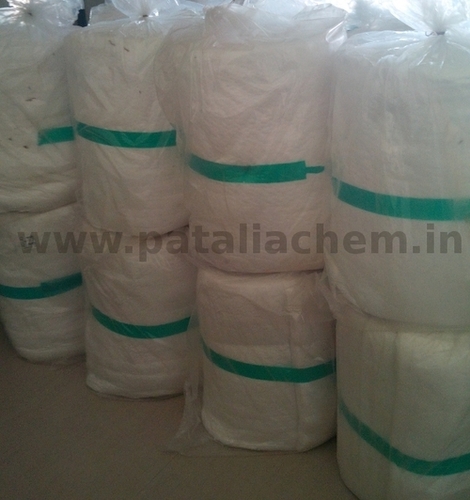
Tell us about your requirement

Price:
Quantity
Select Unit
- 50
- 100
- 200
- 250
- 500
- 1000+
Additional detail
Mobile number
Email

More Products in Ceramic Fiber Blankets Category
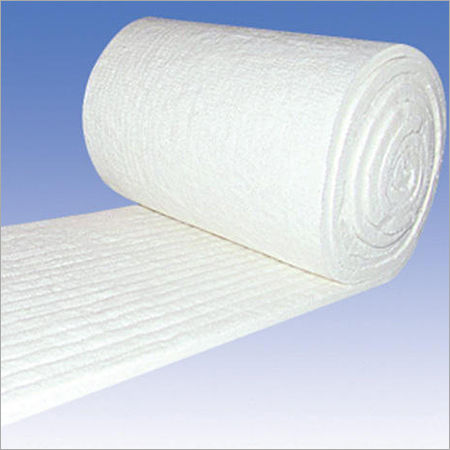
Ceramic Fiber Insulation for Heat Insulation
Price 750 INR / Piece
Minimum Order Quantity : 10 Pieces
Surface Treatment : None
Color : White
Feature : Hightemperature resistance low thermal conductivity lightweight
Product Type : Ceramic Fiber Insulation
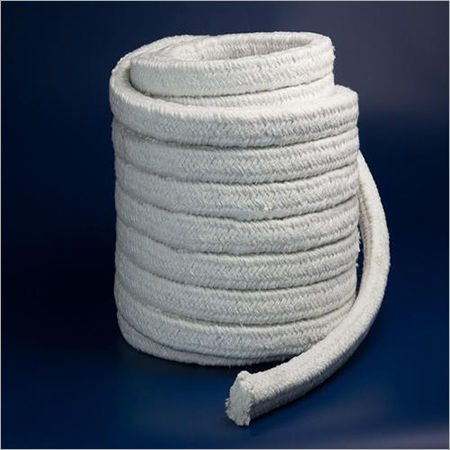
White Ceramic Fiber Rope
Price 75 INR / Meter
Minimum Order Quantity : 100
Surface Treatment : Polished
Color : White
Feature : Good Quality
Product Type : White Ceramic Fiber Rope

 Send Inquiry
Our Products

B/30, M.P. Shah Industrial Estate, Saru Section Road,Jamnagar - 361002, Gujarat, India

Mr. Paras
(Proprietor)
Mobile :08045805108
 Send Inquiry
 Send SMS
Developed and Managed by Infocom Network Private Limited.
 English
 Spanish
 French
 German
 Italian
 Chinese (Simplified)
 Japanese
 Korean
 Arabic
 Portuguese