
Call us now :08045805108
 Send Inquiry
 Send Inquiry
Colloidal Silica
Price 65 INR/ Kilograms
MOQ : 60 Kilograms
Colloidal Silica Specification
- Taste
- Odorless and tasteless
- HS Code
- 28112200
- Solubility
- Insoluble in water, dispersible as a stable colloid
- Ph Level
- pH 9-10 (alkaline, depends on specific grade)
- Purity
- 99%
- Shape
- Spherical (in colloidal suspension)
- Melting Point
- 1600 C (approx.)
- Molecular Weight
- 60.08 g/mol Grams (g)
- Boiling point
- 2230 C (approx. for SiO2)
- Refractive Rate
- 1.46
- Density
- 1.2 Gram per cubic centimeter(g/cm3)
- Molecular Formula
- SiO2
- Smell
- Odorless
- Other Names
- Silica Sol
- Structural Formula
- O=[Si]=O
- Storage
- Store in cool and closed containers, avoid freezing
- Form
- Liquid suspension
- Poisonous
- No
- Classification
- Oxide
- Chemical Name
- Colloidal Silica
- CAS No
- 7631-86-9
- EINECS No
- 231-545-4
- Grade
- Industrial Grade
- Standard
- ISO 9001 Certified
- Type
- Colloidal Silica
- Usage
- Industrial
- Main Material
- Silicon Dioxide
- Application
- Other
- Stabilizing Agent
- Alkali stabilized
- Particle Size
- 10-20 nm (may vary depending on grade)
- Appearance
- Translucent milky-white liquid
- pH Adjustment Range
- 7.5-10.5
- Shelf Life
- 12 months in sealed containers
- Viscosity
- Low viscosity
- Surface Area
- 200 m/g (approx., specific to surface area grades)
Colloidal Silica Trade Information
- Minimum Order Quantity
- 60 Kilograms
- Supply Ability
- 50000 Kilograms Per Month
- Delivery Time
- 30 Days
- Sample Available
- Yes
- Sample Policy
- Contact us for information regarding our sample policy
- Main Export Market(s)
- Australia, North America, South America, Eastern Europe, Western Europe, Middle East, Asia, Central America, Africa
- Main Domestic Market
- All India
Colloidal Silica About
colloidal-silica
The offered Colloidal Silica is regularly made in a multi-step procedure where a soluble base silicate concentration is somewhat neutralized, prompting the making of silica nuclei. Besides, the sub-units are ordinarily in the scope of 1 to 5 nm. Regardless of these sub-units are consolidated relies upon the situation of polymerization. First fermentation of a water-glass concentration yields Si(OH)4. Moreover, in papermaking our Colloidal Silica is utilized as a drainage guide. It expands the measure of cationic starch, which can be held in the paper. The starch is included as measuring agent to build the paper dry quality.
Exceptional Particle Uniformity and Stability
Colloidal Silica features nanoscale, spherical silicon dioxide particles (10-20 nm in size), ensuring reliable dispersion as a stable colloid. Its alkali-stabilized formulation keeps particles from agglomerating, providing consistent low viscosity ideal for precision applications. Each batch offers a high surface area conducive to catalytic and binding uses across industries.
Versatile Industrial Applications
Colloidal Silicas adaptability makes it indispensable in multiple sectors. It serves critical roles in investment and precision casting, papermaking, catalyst supports, coatings, textile finishing, and as a polishing agent. This versatility, coupled with high purity and quality standards, meets rigorous industrial requirements, adding value to end-use processes.
Safe Handling and Reliable Storage
Formulated to be non-poisonous and odorless, Colloidal Silica is safe to handle in industrial environments. Maintain product quality by storing in sealed, cool containers, avoiding freezing. With a shelf life of 12 months, you can depend on this silica sol for reliable performance throughout its recommended usage window.
FAQs of Colloidal Silica:
Q: How should Colloidal Silica be handled and stored to maintain its quality?
A: Colloidal Silica should be handled with standard industrial precautions and stored in tightly closed containers, in a cool environment. Avoid freezing and prolonged exposure to high temperatures. Under these conditions, it retains optimal properties for up to 12 months.Q: What are the main industrial applications of Colloidal Silica?
A: This product is commonly used in precision casting, papermaking, as catalyst carriers, textile treatments, coatings, and as a polishing agent. Its nanoscale particle size and high surface area deliver excellent performance across these diverse applications.Q: When should Colloidal Silica be added during a manufacturing process?
A: Colloidal Silica is typically introduced at stages where binding, surface treatment, or enhancing the structure is required. The exact timing depends on the applicationfor example, as a binder in casting molds or as an agent in textile finishing baths.Q: Where is Colloidal Silica mainly utilized within industries?
A: Colloidal Silica sees widespread usage in foundries for casting, paper manufacturing plants for improving sheet quality, catalyst production facilities, textile mills, coating formulations, and polishing compound manufacturing units.Q: What is the benefit of using alkali-stabilized Colloidal Silica?
A: Alkali stabilization prevents the silica particles from aggregating, ensuring a uniform, low-viscosity liquid that is easy to disperse. This enhances storage stability and maximizes the efficacy in end-use applications.Q: How does Colloidal Silica contribute to product performance?
A: Its high surface area and small, spherical particles enable strong binding, improved surface treatment, and better polish or finish in various substrates. This results in enhanced quality, durability, and functionality of the final products.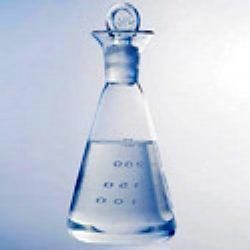
Tell us about your requirement

Price:
Quantity
Select Unit
- 50
- 100
- 200
- 250
- 500
- 1000+
Additional detail
Mobile number
Email

More Products in Colloidal Silica Category
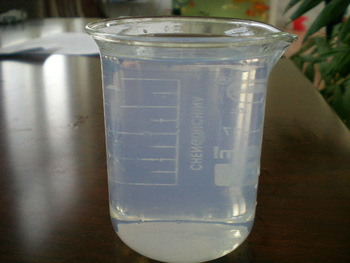
Silical Sol
Price 65 INR / Kilograms
Minimum Order Quantity : 60 Kilograms
Solubility : Miscible with water in all proportions
Purity : Usually 2040% (SiO2 content by weight)
Application : Other
Storage : Other, Store in cool, dry conditions; avoid freezing
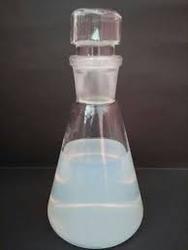
Silicic Acid Sol
Price 65 INR / Kilograms
Minimum Order Quantity : 60 Kilograms
Solubility : In Water
Purity : 98%
Application : Industrial
Storage : Room Temperature
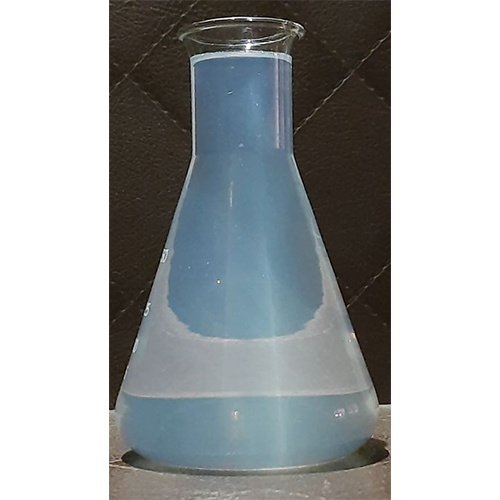
Colloidal Silica
Price 65.0 INR / Kilograms
Minimum Order Quantity : 1000 Kilograms
Solubility : Insoluble in water, soluble in organic solvents
Purity : 99%
Application : Industrial
Storage : Room Temperature

 Send Inquiry
Our Products

B/30, M.P. Shah Industrial Estate, Saru Section Road,Jamnagar - 361002, Gujarat, India

Mr. Paras
(Proprietor)
Mobile :08045805108
 Send Inquiry
 Send SMS
Developed and Managed by Infocom Network Private Limited.
 English
 Spanish
 French
 German
 Italian
 Chinese (Simplified)
 Japanese
 Korean
 Arabic
 Portuguese