
Call us now :08045805108
 Send Inquiry
 Send Inquiry
Molecular Sieves 3a
Price 325 INR/ Kilograms
MOQ : 25 Kilograms
Molecular Sieves 3a Specification
- Color
- White
- Product Type
- Molecular Sieves 3a
- Appearance
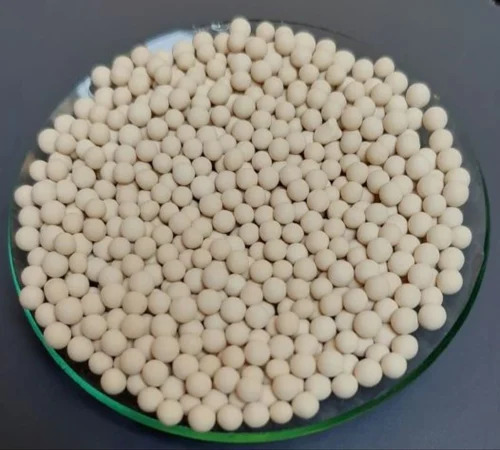
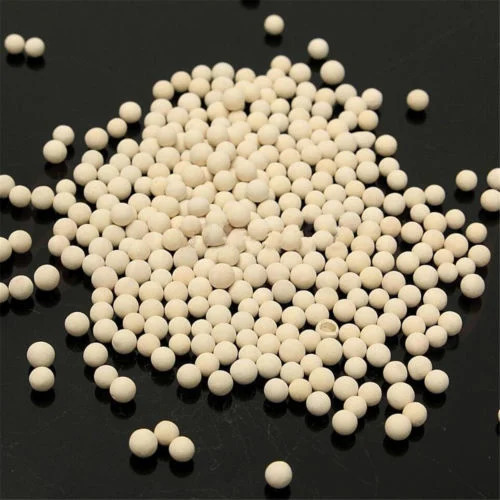
- Granaule
- Form
- Spherical / Beads / Ball
- Grade Standard
- Industrial Grade
- Usage
- Industrial
Molecular Sieves 3a Trade Information
- Minimum Order Quantity
- 25 Kilograms
- Payment Terms
- Cash in Advance (CID), Cheque, Cash Advance (CA)
- Supply Ability
- 10000 Kilograms Per Month
- Delivery Time
- 30 Days
- Sample Available
- Yes
- Sample Policy
- Contact us for information regarding our sample policy
- Packaging Details
- Barrels, Bag and Drum
- Main Export Market(s)
- Australia, Eastern Europe, Middle East, Western Europe, Central America, South America, Asia, North America, Africa
- Main Domestic Market
- All India
Molecular Sieves 3a About
Molecular Sieves 3A MS3
We bring forth for our clients a technically upgraded array of molecular sieves that is used for separating molecules on the basis of their molecular diameter
Product Origin India
Product Details
A SIZE SHAPE Pore Dia3Ao
3mm pellets 24mmballs
B MECHANICAL PROPERTIES
1 Bed crushing strength 90min
2 Loss on attrition 03max
C PHYSICAL PROPERTIES
1 Tapped bulk densitykgm3 650700 750800
2 Static equilibrium water adsorption capacity
at 15RH 1720
at 75RH 2224
3 Free moisture 2max
Sr No PROPERTIES RESULTS
A MECHANICAL
1 Type 3A
2 Form Beads
3 Size 3 5 mm Dia
4 Bed crushing strength 9000
5 Loss on attrition Wear rate Hard surface Tumbling rotation method 029
6 Crush Strength avg of 20balls kgs 72 kgs
B PHYSICAL
1 Water adsorption at 75RH 30oC 2290
2 Water adsorption at 15RH 30oC 1970
3 Thermal stability at 600oC adsorption 2290
4 Benzene other toxic gases adsorption capacity NA
5 Mercaptan removal NA
6 Free moisture at 120oC 180
7 Tapped Bulk density kgm3 720
8 Loss on Ignition 900oC 210
Precision Drying for Industrial Gases
Molecular Sieves 3A excel in removing water from a range of gases, including air, methane, and cracked gas. Their unique structure allows rapid and selective adsorption, reducing moisture content to extremely low levels. This precision is essential for ensuring product purity and protecting sensitive downstream equipment in chemical and petrochemical industries.
Versatile Physical Form for Various Applications
Available in spherical, bead, or ball form, these sieves fulfill diverse industrial needs. Their consistent solid, granule appearance ensures easy handling and uniform distribution within drying columns. Users benefit from their adaptability to different process configurations, enhancing operational efficiency in both batch and continuous drying systems.
Superior Quality and Purity from Trusted Indian Suppliers
These molecular sieves are produced and supplied by leading exporters and manufacturers in India. Meeting both industrial and reagent-grade requirements, they offer a high level of purity and reliability. Responsible manufacturing and stringent quality control guarantee top-tier performance for demanding industrial environments.
FAQ's of Molecular Sieves 3a:
Q: How are Molecular Sieves 3A used in the industrial drying process?
A: Molecular Sieves 3A are packed into drying columns or vessels through which wet gases are passed. Their highly porous structure selectively adsorbs moisture from gases such as air, methane, and cracked gas, efficiently reducing water content to trace levels and ensuring the purity of process streams.Q: What are the main benefits of using Molecular Sieves 3A for gas drying?
A: Using Molecular Sieves 3A delivers precise moisture removal, extending equipment life and improving product quality. Their high adsorption capacity and stability also help maintain continuous operation, reduce maintenance needs, and prevent corrosion in downstream systems.Q: When should Molecular Sieves 3A be replaced in drying columns?
A: The replacement interval depends on process conditions, moisture load, and operational cycles. Regular monitoring of outlet moisture levels can indicate adsorbent saturation, signaling the need for replacement or regeneration to maintain effective drying performance.Q: Where are Molecular Sieves 3A typically applied within industry?
A: These sieves are utilized in sectors such as chemical processing, petrochemical refining, and natural gas production. Key applications include drying air, methane, cracked gases, ethylene, acetylene, and propylene, where stringent moisture control is required.Q: What is the recommended storage condition for Molecular Sieves 3A?
A: It is best to store Molecular Sieves 3A at room temperature in airtight containers to avoid premature exposure to ambient moisture, which can reduce their adsorption efficiency before use.Q: What forms are available for Molecular Sieves 3A and how does form affect usage?
A: Molecular Sieves 3A are available in granule, bead, and spherical (ball) forms. The choice depends on application requirements, column design, and flow characteristics, ensuring optimal surface area contact and efficient drying.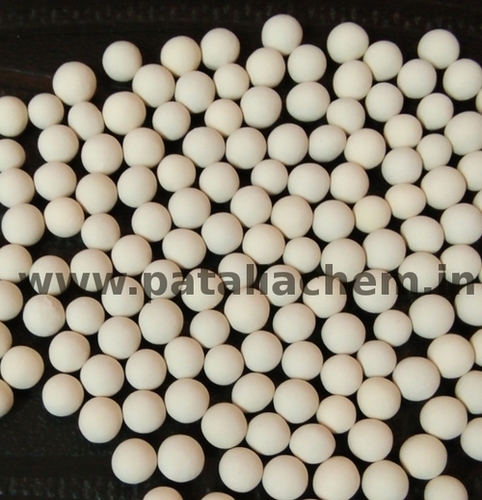
Tell us about your requirement

Price:
Quantity
Select Unit
- 50
- 100
- 200
- 250
- 500
- 1000+
Additional detail
Mobile number
Email

More Products in Molecular Sieves Category
Molecular Sieves
Price 225 INR / Kilograms
Minimum Order Quantity : 25 Kilograms
Grade : Reagent Grade
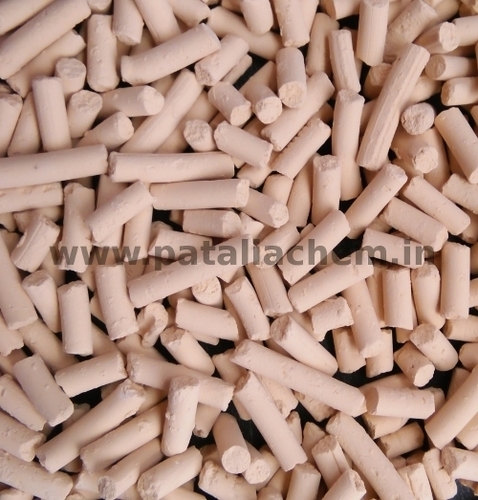
Form : Solid
Density : 430 660 Kilogram per cubic meter (kg/m3)
Purity : 100%

Molecular Sieves 5a
Price 325 INR / Kilograms
Minimum Order Quantity : 25 Kilograms
Grade : Reagent Grade
Form : Solid
Density : 430 660 Kilogram per cubic meter (kg/m3)
Purity : 100%
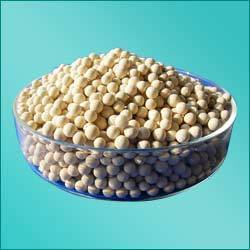
Molecular Sieves Pellets
Price 285 INR / Kilograms
Minimum Order Quantity : 25 Kilograms
Grade : Reagent Grade
Form : Solid
Density : 430 660 Kilogram per cubic meter (kg/m3)
Purity : 100%
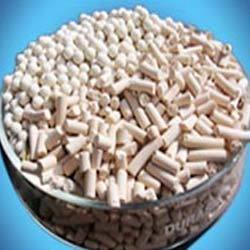
Molecular Sieves TYPE 13X
Price 325 INR / Kilograms
Minimum Order Quantity : 25 Kilograms
Grade : Reagent Grade
Form : Solid
Density : 430 660 Kilogram per cubic meter (kg/m3)
Purity : 100%

 Send Inquiry
Our Products

B/30, M.P. Shah Industrial Estate, Saru Section Road,Jamnagar - 361002, Gujarat, India

Mr. Paras
(Proprietor)
Mobile :08045805108
 Send Inquiry
 Send SMS
Developed and Managed by Infocom Network Private Limited.
 English
 Spanish
 French
 German
 Italian
 Chinese (Simplified)
 Japanese
 Korean
 Arabic
 Portuguese