
Call us now :08045805108
 Send Inquiry
 Send Inquiry
Molecular Sieves TYPE 13X
Price 325 INR/ Kilograms
MOQ : 25 Kilograms
Molecular Sieves TYPE 13X Specification
- Color
- White
- Product Type
- Molecular Sieves TYPE 13X
- Grade Standard
- Industrial Grade
- Usage
- Industrial
Molecular Sieves TYPE 13X Trade Information
- Minimum Order Quantity
- 25 Kilograms
- Payment Terms
- Cash in Advance (CID), Cheque, Cash Advance (CA)
- Supply Ability
- 10000 Kilograms Per Month
- Delivery Time
- 30 Days
- Sample Available
- Yes
- Sample Policy
- Contact us for information regarding our sample policy
- Packaging Details
- Barrels, Bag and Drum
- Main Export Market(s)
- Australia, South America, Middle East, Africa, Western Europe, Central America, Asia, Eastern Europe, North America
- Main Domestic Market
- All India
Molecular Sieves TYPE 13X About
Molecular Sieves TYPE13X MS13
The offered Molecular Sieves Type 13X is made with quality contents and chemicals that makes it useful to assimilate molecules of greater diameters for example branchedchain hydrocarbons and aromatics Any particles can be simply assimilated on our product This has a porous carbon skeletal system that comes right following the pyrolysis of different polymeric precursors Our Molecular Sieves Type 13X delivers outstanding porous properties that remain static after numerous years of applications This is also used to make minute molecular size elements of c2c5
Features
24 balls and 3 mm pellets are provided
80 minimum is the bed crushing strength
05 maximum is the loss on attrition
550700 KGM is the tapped bulk density
It has static equal water retention capacity of 2022 at 15RH and 2427 at 75RH respectively
It has maximum 2 free moisture
3035 is the Benzene retention capacity
Product Details
A SIZE SHAPE Pore Dia10Ao
3 mm Pellets 24mm Balls
B MECHANICAL PROPERTIES
1 Bed crushing strength 80min
2 Loss on attrition 0 5max
C PHYSICAL PROPERTIES
1 Tapped bulk densitykgm 550600 650700
2 Static equilibrium water adsorption capacity
at 15RH 2022
at 75RH 2427
Benzene adsorption Capacity 3035
3 Free moisture 2max
ANALYTICAL REMARKS
The above material supplied meets the specifications of our Grade MS13X
Life of molecular sieves is largely dependent upon operating conditions and contaminant levels
CHEMICAL COMPOSITION
Na2O 218 Al2O3 199 SiO2 582
Sr No PROPERTIES RESULTS
A MECHANICAL
1 Type 13X
2 Form
3 Size 3 mm Dia
4 Bed crushing strength 8500
5 Ind Pellet CSavgof 20 pellets Kgs 83 kgs
6 Loss on attrition Wear rate Hard surface Tumbling rotation method 037
B PHYSICAL
1 Water adsorption at 75RH 30oC 2490
2 Water adsorption at 15RH 30oC 2190
3 Thermal stability at 600oC adsorption 2490
4 Benzene other toxic gases adsorption capacity 3250
5 Mercaptan removal 700
6 Free moisture at 120oC 120
7 Tapped Bulk density kgm3 670
8 Loss on Ignition 900oC 170
Efficient Adsorption for Industrial Processes
Our Molecular Sieves TYPE 13X are designed for the effective removal of moisture, CO2, and other impurities from gases and liquids in industrial environments. Their unique porous structure ensures superior adsorption, making them indispensable for petrochemical, gas drying, and air separation industries.
Versatile Usage and High Purity
With 100% purity and tailored density, TYPE 13X molecular sieves serve both industrial processes and unconventional uses, such as writing on blackboards. Their robust construction ensures they maintain performance without degrading, providing reliable results across multiple applications.
Quality and Compliance Standards
Supplied in reagent and industrial grades, these sieves meet stringent international standards. As a trusted Indian exporter and manufacturer, we ensure that all products are rigorously tested for quality, guaranteeing both safety and efficiency in intended applications.
FAQ's of Molecular Sieves TYPE 13X:
Q: How do Molecular Sieves TYPE 13X function in industrial settings?
A: TYPE 13X molecular sieves operate by adsorbing moisture and various impurities from gases and liquids through their highly porous solid structure. This makes them invaluable in sectors such as natural gas processing and air separation.Q: What benefits do Molecular Sieves TYPE 13X offer for blackboard writing?
A: When used in blackboard writing, Molecular Sieves TYPE 13X provide an effective surface for chalk adherence and easy cleaning. Their high purity ensures a non-reactive, safe writing environment.Q: Where should Molecular Sieves TYPE 13X be stored?
A: These sieves should be stored at room temperature in a dry environment. Proper storage maintains their adsorptive capacity and overall performance.Q: What makes TYPE 13X suitable for industrial and reagent-grade applications?
A: With robust adsorption capabilities, consistent quality, and a density range of 430-660 kg/m3, TYPE 13X sieves deliver reliable results in both industrial operations and laboratory environments requiring reagent-grade materials.Q: When is it recommended to replace or regenerate Molecular Sieves TYPE 13X?
A: Molecular sieves should be replaced or regenerated once their adsorption capacity diminishes, which is typically indicated by decreased process efficiency or increased impurity levels in output streams.Q: What is the process for regenerating Molecular Sieves TYPE 13X?
A: Regeneration involves heating the sieves to drive off adsorbed contaminants, restoring their original adsorption capabilities for continued use.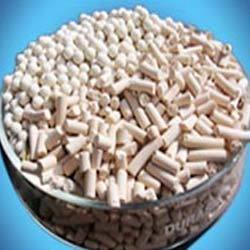
Tell us about your requirement

Price:
Quantity
Select Unit
- 50
- 100
- 200
- 250
- 500
- 1000+
Additional detail
Mobile number
Email

More Products in Molecular Sieves Category
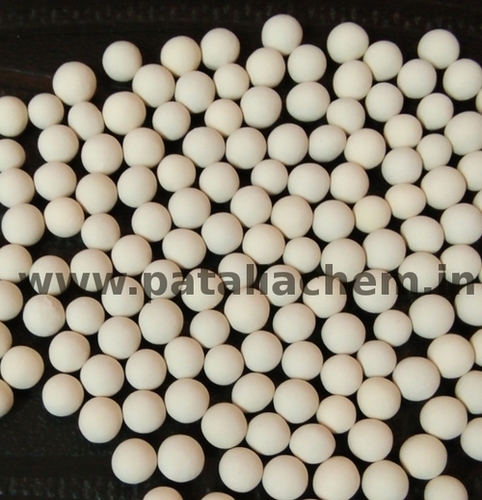
Molecular Sieves 3a
Price 325 INR / Kilograms
Minimum Order Quantity : 25 Kilograms
Grade : Reagent Grade
Form : Spherical / Beads / Ball
Storage : Room Temperature
Density : 430660 Kilogram per cubic meter (kg/m3)
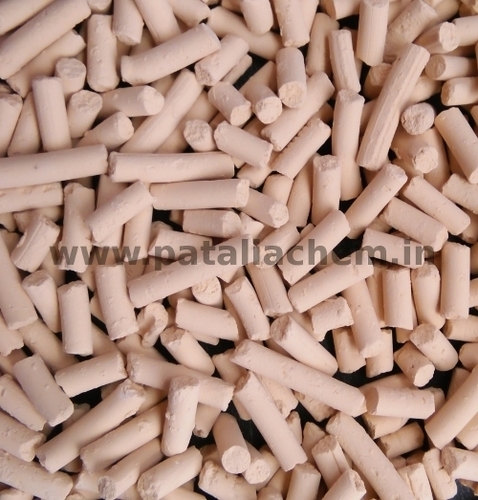
Molecular Sieves
Price 225 INR / Kilograms
Minimum Order Quantity : 25 Kilograms
Grade : Reagent Grade
Form : Solid
Storage : Room Temperature
Density : 430 660 Kilogram per cubic meter (kg/m3)

Molecular Sieves 5a
Price 325 INR / Kilograms
Minimum Order Quantity : 25 Kilograms
Grade : Reagent Grade
Form : Solid
Storage : Room Temperature
Density : 430 660 Kilogram per cubic meter (kg/m3)
Molecular Sieves Pellets
Price 285 INR / Kilograms
Minimum Order Quantity : 25 Kilograms
Grade : Reagent Grade
Form : Solid
Storage : Room Temperature
Density : 430 660 Kilogram per cubic meter (kg/m3)

 Send Inquiry
Our Products

B/30, M.P. Shah Industrial Estate, Saru Section Road,Jamnagar - 361002, Gujarat, India

Mr. Paras
(Proprietor)
Mobile :08045805108
 Send Inquiry
 Send SMS
 Call Me Free
Developed and Managed by Infocom Network Private Limited.
 English
 Spanish
 French
 German
 Italian
 Chinese (Simplified)
 Japanese
 Korean
 Arabic
 Portuguese