Call us now :08045805108
 Send Inquiry
 Send Inquiry
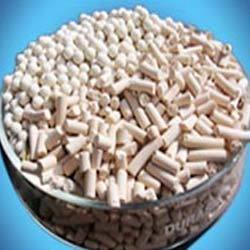
Molecular Sieves Pellets
Price 285 INR/ Kilograms
MOQ : 25 Kilograms
Molecular Sieves Pellets Specification
- Product Type
- Molecular Sieves Pellets
- Color
- White
- Form
- Spherical / Beads / Ball
- Grade Standard
- Industrial Grade
- Usage
- Industrial
Molecular Sieves Pellets Trade Information
- Minimum Order Quantity
- 25 Kilograms
- Payment Terms
- Cash in Advance (CID), Cheque, Cash Advance (CA)
- Supply Ability
- 10000 Kilograms Per Month
- Delivery Time
- 30 Days
- Sample Available
- Yes
- Sample Policy
- Contact us for information regarding our sample policy
- Packaging Details
- Barrels, Bag and Drum
- Main Export Market(s)
- Australia, South America, Middle East, Western Europe, Central America, Asia, Eastern Europe, North America, Africa
- Main Domestic Market
- All India
Molecular Sieves Pellets About
Molecular Sieves Pellets
The offered Molecular Sieves Pellets find their application in the disintegration of the isomerous and normal alkane, carbon dioxide co-adsorption, gases pressure swing adsorption and moisture co-adsorption. It is acclaimed among the customers for its outstanding assimilation of all types of molecules that are smaller than the size. This also features fast retention speed. Besides, the user-amiable and compact design of our Molecular Sieves Pellets make us distinguished from other companies in the market.
Product Details:
- SIZE & SHAPE: (Pore Dia. = 5Ao)
- 3mm. Pellets. 2-4mm. Dia. Balls
MECHANICAL PROPERTIES:
- Bed crushing strength,% = 90min.
- Loss on attrition,% = 0. 3max.
PHYSICAL PROPERTIES:
- Tapped bulk density,kg/m3 = 700-750 / 750-800
- Static equilibrium water adsorption capacity,%
at 15RH: 17-20%
at 75RH: 22-25%
3. Free moisture: = 2%max.
Versatile Drying Solution
Molecular Sieves Pellets offer superior drying capabilities for a wide range of industrial gases, including air, methane, ethylene, acetylene, and propylene. Their high purity and versatile form factors make them suitable for various process requirements, ensuring dependable removal of moisture and enhancing process efficiency.
Quality and Consistency Assured
Manufactured under stringent quality controls, our molecular sieves meet both reagent and industrial grade standards. Their consistent density and structural integrity guarantee uniform adsorption results, helping operators achieve optimal gas purity and process continuity.
FAQ's of Molecular Sieves Pellets:
Q: How do Molecular Sieves Pellets function in industrial drying processes?
A: Molecular Sieves Pellets work by adsorbing moisture and specific impurities from gases or liquids. Their uniform pore size and high purity allow them to effectively trap water molecules and other contaminants, making them ideal for drying air, methane, cracked gases, and hydrocarbons like ethylene and acetylene.Q: What are the typical applications for these molecular sieves?
A: These sieves are primarily used for drying and purifying industrial gases such as air, methane, cracked gas mixtures, ethylene, acetylene, and propylene, supporting applications in chemical processing, gas production, and petrochemical industries.Q: When should molecular sieves be replaced or regenerated?
A: Molecular sieves should be replaced or regenerated when their adsorption capacity diminishes, often indicated by an increase in downstream moisture levels. The exact timing depends on the operating conditions and the amount of moisture or contaminants in the feed stream.Q: Where can these molecular sieves be stored for optimal performance?
A: It is recommended to store molecular sieves in a cool, dry place at room temperature. Proper storage helps maintain their high adsorption efficiency and prevents premature exposure to atmospheric moisture.Q: What is the process for using these sieves in gas drying?
A: Typically, the sieves are packed into dedicated adsorption columns. As the gas passes through, the sieves adsorb moisture and impurities, resulting in a purified output. Once saturated, the sieves can often be regenerated for continued use.Q: What benefits do these molecular sieves offer compared to other drying agents?
A: With 100% purity and a consistent density range, our molecular sieves provide highly efficient, reliable moisture removal, minimal contamination risk, and easy regeneration, delivering superior cost-effectiveness in industrial operations.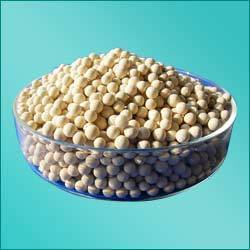
Tell us about your requirement

Price:
Quantity
Select Unit
- 50
- 100
- 200
- 250
- 500
- 1000+
Additional detail
Mobile number
Email

More Products in Molecular Sieves Category
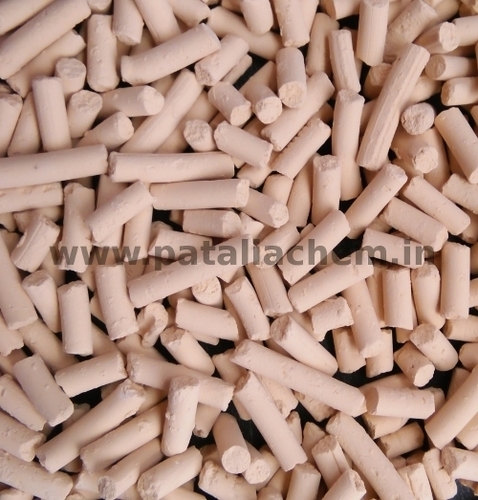
Molecular Sieves
Price 225 INR / Kilograms
Minimum Order Quantity : 25 Kilograms
Storage : Room Temperature
Form : Solid
Type : Molecular Sieves
Purity : 100%

Molecular Sieves 5a
Price 325 INR / Kilograms
Minimum Order Quantity : 25 Kilograms
Storage : Room Temperature
Form : Solid
Type : Molecular Sieves
Purity : 100%
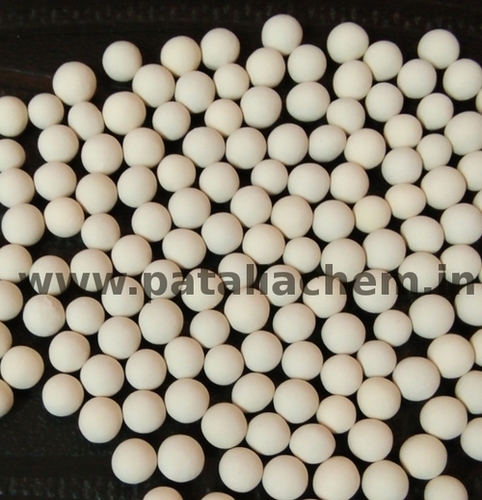
Molecular Sieves 3a
Price 325 INR / Kilograms
Minimum Order Quantity : 25 Kilograms
Storage : Room Temperature
Form : Spherical / Beads / Ball
Type : Molecular Sieves
Purity : 100%
Molecular Sieves TYPE 13X
Price 325 INR / Kilograms
Minimum Order Quantity : 25 Kilograms
Storage : Room Temperature
Form : Solid
Type : Molecular Sieves
Purity : 100%

 Send Inquiry
Our Products

B/30, M.P. Shah Industrial Estate, Saru Section Road,Jamnagar - 361002, Gujarat, India

Mr. Paras
(Proprietor)
Mobile :08045805108
 Send Inquiry
 Send SMS
 Call Me Free
Developed and Managed by Infocom Network Private Limited.
 English
 Spanish
 French
 German
 Italian
 Chinese (Simplified)
 Japanese
 Korean
 Arabic
 Portuguese